
Honouring the values, unity, and social responsibility that connect the global APG network every 27 May.
Every year on 27 May, the global APG network comes together to celebrate a date that holds special meaning for our company: APG Day.
The Meaning Behind APG Day

The date, 27.5, reflects our airline code GP-275, symbolising the shared identity and values that connect APG across more than 100 offices worldwide. But APG Day is far more than a company celebration. It is a reflection of the spirit that connects APG teams, partners, and communities around the world.
More Than a Celebration
At APG, we are proud of our achievements, our people, and our long-standing contribution to the travel and aviation industry. Among the values that define APG most strongly is our commitment to social responsibility.
Supporting Communities Worldwide
Throughout the year, APG quietly supports local charities, community initiatives, and projects that help improve the lives of vulnerable and less fortunate people.
We believe that meaningful action speaks louder than words, and that giving back should be driven by genuine care and responsibility.
Each APG Day, teams across the global network mark the occasion by organising and participating in socially responsible activities alongside local travel trade partners and communities. From charity initiatives and volunteer projects to community outreach activities, APG offices come together to support causes that matter locally while reinforcing the collaboration and unity that define APG worldwide.



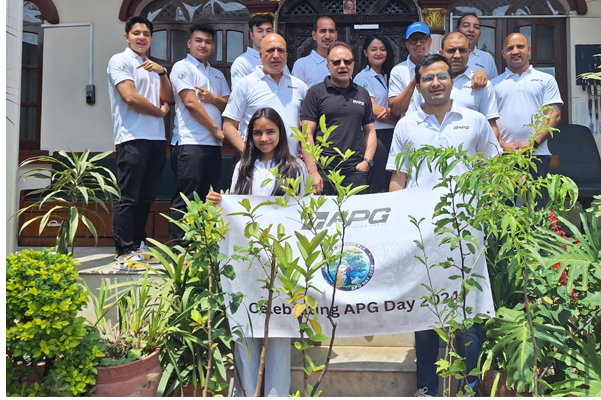
One network united by shared values, purpose, and the spirit of making a difference.
One Network, One Spirit
APG Day is a celebration of unity, compassion, purpose, and the spirit that connects APG across cultures, countries, and communities. It reflects the belief that success is measured not only by business growth, but also by the positive impact we create together.
As APG Day is celebrated across the world, we thank our teams, partners, and communities for continuing to embody the values that make APG more than a network, but a global family united by purpose and shared responsibility.

It is well known that half of the passengers are afraid aboard a plane. It is often only a diffuse anxiety, but it can sometimes take on more spectacular aspects, such as the United Airlines passenger who tried to open the door of the aircraft on a flight from Newark to Guatemala City at an altitude of 11,000 meters. It must be said that a customer’s journey to arrive safely is strewn with an impressive number of obstacles.
Before arriving at the airport
The stress starts as soon as you book. Unless they go through a travel agency that will make their job much easier for a modest price, the customer will have to use their computer or smartphone to select the flight(s) that suit them without knowing the final price of the transaction. Admittedly, the carriers’ websites are generally rather well done, especially if you speak English, and it is relatively easy to choose your flights, except that the fare indicated does not include the basic options.
Depending on the needs, you have to add the price of a carry-on bag or a checked bag, the choice of your seat unless you find yourself in the middle seat, stuck between two other passengers whose size and behavior you don’t know, all at the back of the aircraft, take out insurance or not, and so on. In short, unless the customer is very used to their airline and their route, they still have to wait for their boarding pass without knowing when they will be able to get it, each carrier having its own practices.
However, it should be recognized that obtaining the boarding pass directly and thus avoiding the mandatory passage through the company’s counter is a clear step forward.
The passenger still has to go to the airport and there is additional stress. How long will it take them, especially if they go there by car and moreover if they use their personal vehicle that they will have to park in one of the many car parks whose accesses are not always well indicated? How do they know the traffic situation? What is the check-in time limit if they have a piece of luggage to put on board? How long will it take to get to the boarding gate? As the passenger doesn’t know anything about it, they will take all their precautions, finally arriving at the airport much too early, and they will not always know how to kill time before departure.
Crossing the airport
This is the most delicate and stressful moment, especially when it comes to very large platforms that are very congested, sometimes with faulty signage, and where the distances to be covered are long and not always assisted by conveyor belts. The customer will need a lot of patience and a great knowledge of air transport practices to complete the journey without too much stress. Because the obstacles are innumerable, so much so that one wonders if they were not created voluntarily to discourage passengers.
It starts with the queue at the check-in counter, a delicate moment especially for some destinations for which passengers take a huge package of luggage, trying to haggle over the price of excess weight or even the size of the suitcase. At some airports, all customers, even those with their boarding pass, must pass through this first obstacle. Once this has passed, you must quickly move on to the second one, which is, depending on the case, the police filter applicable or not depending on the country, the nationality of the customer and their destination and, in any case, the famous PIF (Screening Inspection Post) created in the mid-1990s after spectacular attacks and plane hijackings.
This is the place where you will have to endure the perfectly random rules of the gates that ring or not depending on the way they have been adjusted, which varies from one terminal to another and from one airport to another. Fortunately, the major platforms are starting to equip themselves with equipment that prevents you from taking off your shoes, or even taking your computer or tablet out of your suitcase. But this passage remains a mandatory moment and it seems that air transport customers are more dangerous than train customers, who are not subject to this constraint in stations.
The relief is palpable once this dreaded moment is over and the passenger can go to their departure lounge, provided that they have clearly identified it and that it is properly indicated. Their route will inevitably lead them to cross the commercial zone which is taking up more and more space, especially in the major airports. One may also wonder if all the precautions that a passenger must take are not intended only to lead them to create a long moment where they will have nothing to do but stroll in the “duty free” area to make purchases which will ultimately contribute to nearly 50% of the turnover of the major airports.
This is the first part of the journey. I don’t have enough space to get to the end of the trip, which will be the subject of the next column.
The aviation sector is going through repeated turbulence. Recently, on May 2 to be exact, Spirit Airlines, one of the main American low-cost airlines, filed for bankruptcy and stopped all its flights. However, it is not a small operator. It carried up to 44 million passengers in 2024, achieved a turnover of around $5 billion with a fleet of around 200 aircraft. It is difficult to understand why such a company could not resist the rise in oil prices, especially in the United States, which is much less affected than most other countries in the world. It is quite possible that its pricing practices, on the edge of legality, intended to attract a clientele fond of slashed prices, were the main cause of its bankruptcy, especially since repeated complaints had been registered with the American Civil Aviation authorities. I don’t know how many customers, probably several million, bought their tickets in advance. I wish them good luck in recovering their investment. This is another example of the search for visibility at the top of price comparison sites. Sooner or later, pricing practices that do not cover costs will have to end up being sanctioned. It should be remembered that below $40 per flight hour, airlines fall below their break-even point. And let’s keep a thought for the 17,000 employees of the company who will have to find jobs during a difficult period for air transport.
After this example, which we could easily do without, let us return to an aspect that is often ignored and which is nevertheless essential for air transport: the lack of qualified labour.
During the appalling Covid period, which saw air transport reduced to its simplest expression with thousands of aircraft stored on the ground in airports renowned for their desert position, which allowed better preservation of aircraft, manufacturers, engine manufacturers and their countless list of subcontractors massively parted ways with large numbers of employees. We can understand them, they had nothing more to do and, above all, no more prospects because it was impossible to foresee any recovery. So the first to leave were the seniors of these companies who, in many countries and in particular in Western countries, benefited from early retirements paid by governments. This took a great deal of weight off their employers, especially since they were generally the best paid.
But to everyone’s surprise, vaccines were found and put on the market with a speed that no one could have envisaged. So much so that after two years, the lockdowns imposed on the population were lifted and air transport was able to restart with surprising speed. Prices have increased by 30% but customers were so impatient to travel that they easily accepted these prices, which were largely readjusted upwards. And air transport has regained its growth rate, even if the current conflicts are dampening enthusiasm a little. Orders for new aircraft began to pour in, with each carrier wanting to position itself on the manufacturers’ waiting list.
However, the latter are unable to meet the demand. Lead times are getting longer without airlines having a clear view of the delivery rate of their orders. The matter is not so simple. To fly an aircraft, engines are essential and their construction is particularly delicate. The engine manufacturers Safran, but also Pratt & Whitney and Rolls-Royce are unable to manufacture them fast enough for one main reason: there is no longer enough qualified labour. Much of the know-how and experience held by older employees has been lost, and despite tempting offers from manufacturers, new retirees do not seem to be in a hurry to return to work.
The consequences are serious. Currently, around 500 aircraft assembled by manufacturers are grounded because there is simply a lack of engines. This represents a shortfall of around 600,000 seats per day, with an average of 200 seats and 6 daily flights. That’s nearly 200 million seats per year. And this is not going to be solved by a wave of a magic wand. The training of highly qualified and experienced staff first requires time, provided that sufficient new employees can be recruited, trained and supervised. Meanwhile, orders continue to pour in.
In addition, air transport needs rare metals and, as their name suggests, they are difficult to obtain. The sector of activity is a victim of its own success, a bit like overtourism, and it is very difficult to curb such activity, to the great displeasure of environmentalists.
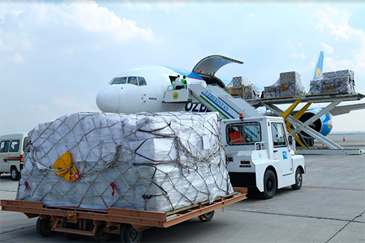
APG is pleased to announce the signing of a new Interline Cargo Agreement with Uzbekistan Airways.
This new partnership gives APG Cargo direct access to Uzbekistan Airways’ cargo capacity, strengthening global connectivity and creating new opportunities for efficient freight solutions across international markets.
The agreement further expands the APG Cargo network and reinforces APG’s commitment to providing flexible and reliable cargo solutions through a growing portfolio of airline partners.
Through this collaboration, cargo agents and freight forwarders will benefit from enhanced access to Uzbekistan Airways’ network and cargo services.
“ Partnering with Uzbekistan Airways further strengthens APG Cargo’s global network and reinforces our commitment to delivering efficient and reliable cargo solutions to the market.
With extensive experience in airline representation and cargo services, APG delivers tailored solutions designed to support airline growth, optimise market performance, and provide responsive local support to partners worldwide.
The appointment also reinforces APG’s commitment to expanding connectivity and supporting efficient cargo operations between Africa, Europe, and international markets through strategic airline partnerships.
For more information about APG cargo services, visit APG Cargo Services
Movement is one of the defining characteristics of air transport, and that is quite normal. But since the beginning of 2026, we have been witnessing changes that are likely to have a lasting impact on this sector. Despite the current difficulties, which we hope will soon be behind us, the trend appears to be moving towards improved service quality combined with a general increase in fares.
The best example is still provided by Emirates. It has just published its results for the 2025/2026 financial year, which ended on March 31 this year. The results are impressive. Although the number of passengers declined by 1% to 53.2 million, revenue increased by 2% to $35.7 billion and, above all, net profit reached an unprecedented level of $5.4 billion. The load factor fell slightly to 78.4%, compared to 78.9% the previous year, but yield increased by 4%, representing revenue of $10.4 per passenger kilometre transported. This avalanche of figures leaves us dreaming, as it clearly demonstrates the company’s outstanding performance. Emirates also maintains a highly prosperous net cash position of $15 billion, allowing it to cover its fuel purchases over a long period and greatly mitigate the effects of oil price spikes. In total, the company generated a net profit equivalent to 15% of its turnover, representing one of the best performances ever seen in air transport.
This is the result of a strategy based entirely on service quality and reasonable pricing. It relies on the regular renewal of its fleet, which currently numbers 277 long-haul aircraft, as well as strong cooperation with dnata, its parent company, which manages among other things airport activities in Dubai.
I also note that product improvement has become a constant in today’s air transport industry. Traditional airlines that had allowed their service quality to decline in order to align fares with those of low-cost carriers are now moving in the opposite direction. It must be recognised that all major carriers have undertaken to rethink their products, from airport access to in-flight services. So much so that airlines which had abandoned the concept of first class are now in the process of reintroducing it. I also note that improving service quality in premium cabins inevitably benefits economy class as well and gives crews a greater sense of pride, encouraging them to interact even better with customers. This strongly resembles the beginning of a virtuous cycle that can only be welcomed.
Low-cost airlines have also followed this new direction. We can even see American operators such as JetBlue opening lounges in airports. These same low-cost carriers are now embracing distribution through travel agents and GDSs, something they had fiercely resisted until now. We even see an airline such as Ryanair, long known for defending the lowest possible fares through the support of local authorities, backtracking in the face of the growing need to abandon practices that once made it successful. Public subsidies will indeed be completely banned in Europe, at least.
Conversely, proponents of ultra-low fares may struggle to survive. A major operator such as Spirit Airlines was forced to shut down because the support it expected from the federal authorities, promised by Donald Trump, ultimately failed to materialise. In Europe, carriers known for very low fares such as Wizz Air or Volotea also have reason for concern, although they provide a valuable service by operating routes abandoned by traditional airlines. Without public support, it is difficult to see how they will withstand the impact of rising Jet A1 fuel prices, since they have little or no protection against fuel price increases, unlike the major carriers.
To overcome these difficulties, relations between so-called regional airlines and local authorities may need to be fundamentally rethought. Rather than granting subsidies, which are clearly unsustainable, regional authorities would be better advised to purchase air services from carriers through competitive tenders, with revenues managed by the contracting authority. However, this may require a revision of existing public regulations. Such a procedure already applies to regional rail transport, and it is difficult to see why it should not also be extended to air transport.
A prosperous air transport industry is possible provided that we avoid excesses and accept that every service has a real cost, and that selling below that cost is ultimately suicidal.
We are proud to announce that ITA Airways is now available on APG Direct Connect through the Lufthansa Group NDC API.
From its primary hubs in Rome (FCO) and Milan (LIN), the airline offers premium connectivity to more than 70 global destinations with a modern and eco-efficient fleet.

With extensive experience in airline representation and cargo services, APG delivers tailored solutions designed to support airline growth, optimise market performance, and provide responsive local support to partners worldwide.
The appointment also reinforces APG’s commitment to expanding connectivity and supporting efficient cargo operations between Africa, Europe, and international markets through strategic airline partnerships.
For more information, visit APG Direct Connect
APG Airlines is pleased to welcome Shenzhen Airlines as a new interline partner, further expanding the global reach available on GP-275 ticket stock.
As a member of the Star Alliance, Shenzhen Airlines operates an extensive domestic network throughout China alongside selected international services across Asia, Europe, and Australia. The carrier currently serves more than 80 destinations in over 15 countries.
With this addition, Shenzhen Airlines services can now be issued on APG Airlines’ GP-275 stock, offering greater connectivity and ticketing flexibility for travel agents and passengers worldwide.
For more information, visit APG Airlines
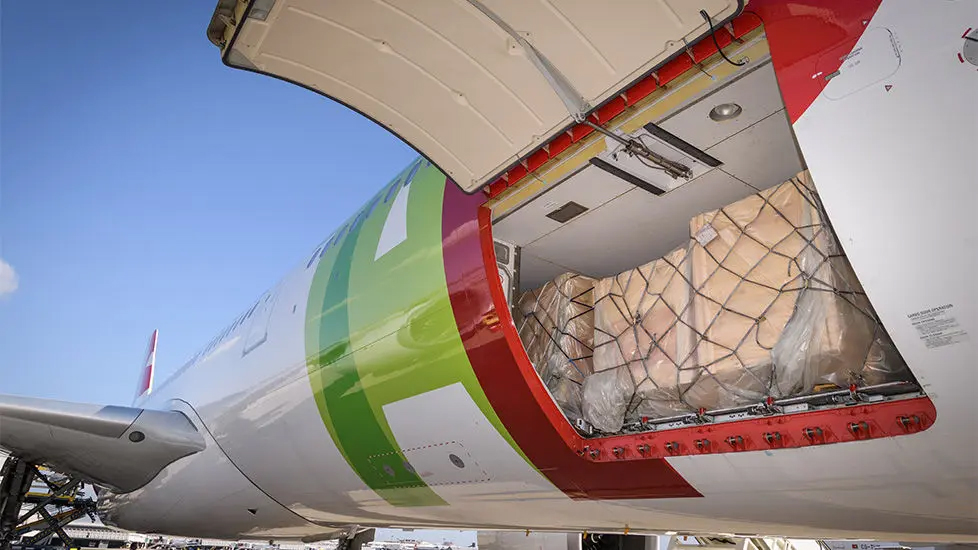
APG has been appointed Cargo GSA for TAP Air Cargo in South Africa, further strengthening the airline’s cargo presence in the region and expanding APG’s growing cargo network across Africa.
APG EXPANDS CARGO PRESENCE IN AFRICA
This new partnership marks another important step in the continued expansion of APG’s cargo activities across the African market and further strengthens the Group’s global cargo representation network.
As Cargo GSA, APG will provide TAP Air Cargo with dedicated local commercial support, sales development, and market expertise in South Africa, helping to enhance the airline’s cargo presence and strengthen relationships with the freight forwarding community.
“ This partnership further strengthens APG’s cargo network across Africa and supports enhanced connectivity between Africa and Europe.
With extensive experience in airline representation and cargo services, APG delivers tailored solutions designed to support airline growth, optimise market performance, and provide responsive local support to partners worldwide.
The appointment also reinforces APG’s commitment to expanding connectivity and supporting efficient cargo operations between Africa, Europe, and international markets through strategic airline partnerships.
For more information about APG cargo services, visit APG Cargo Services
The impact of the Gulf conflict on aviation is not simple, and the constant reversals of the actors make it impossible to make predictions about the end of the crisis. The complexity is all the more important for air transport as this conflict comes on top of the war between Russia and Ukraine, which has entered its fifth year. We never end. It is nevertheless curious that the belligerents have so much difficulty in sitting around a table to find an agreement since, in the end, they will be forced to do so. The consequences for airlines are not trivial.
First of all, there is the recurrent problem of fuel supply. A very good article in Air Journal sheds light on the European situation. 70% of the jet fuel consumed in Europe comes from the Middle East and, in particular, from the Al Zour complex in Kuwait. It is clear that this source of supply of Jet A or Jet A1 will be significantly reduced as long as the Strait of Hormuz is not reopened to navigation, and this may take several months after the end of hostilities, which is not for tomorrow. But the Persian Gulf is not the only potential supplier. The United States has come to the rescue and, while only 3% of European supplies came from this country before the conflict, the amount is now 40%. And it is possible to find new sources. However, it is quite possible that the price will remain at a very high level while transporters had become accustomed to a reasonable rate, around $65 per barrel, while it is around $100, and this may be for a long time. So the companies will have to redo their cost price calculations and therefore their public tariffs.
And here is another parameter. If, as one might think, prices will increase by around 10% to 15% to compensate for both fuel costs and longer flight times, especially between Europe and Asia, it is possible that this will slow down travel enthusiasm and that trips scheduled for leisure will simply be postponed, as air consumers are content with ground travel. On the other hand, we have the experience of coming out of Covid. The carriers did not hesitate to increase fares by around 30%, and in the end this was rather well accepted by customers, proof, if ever there was one, that the race for the lowest fares is and remains a stupidity that air transport will have to get rid of.
But there is something more diffuse, and that is fear. It is known that 50% of passengers have a more or less diffuse fear of planes. Some even have anxiety attacks, and it is not the obstacle course they have to endure in airports that will reassure them. So if we add to this form of anxiety the fear of being attacked by a drone or a lost missile, this can greatly influence consumer behavior. This is all the more pernicious because, even if the possibilities of hitting a civilian aircraft in the event of war are extremely rare, the examples are very real, between the Malaysian Airlines aircraft shot down over Ukraine by pro-Russian partisans, the Azerbaijan Airlines Embraer 190 hit by a Russian air defense error again, or even when an Iranian Airbus A300 was hit by an American missile strike, but that was in 1988. In short, we must not play with the nerves of the soldiers in charge of anti-aircraft defense.
However, should air transport fear for its future, even in the short term? I am not convinced of that. Even if there could be a certain restriction of flights here and there, it would be surprising if it took on large proportions. On the other hand, carriers may be tempted to group together flights that are not well filled, especially when the services are very dense, such as the transatlantic axis. And let’s keep in mind that passengers for tourist reasons don’t just travel by plane; they have also bought their stays and booked their hotels and other tourist activities a long time ago to benefit from the lowest rates. They will have a hard time cancelling their holidays. It would therefore be surprising if air transport were to sink significantly. On the other hand, it is likely that the Middle Eastern destinations that were becoming very popular, I am thinking in particular of the Emirates, will be largely abandoned as long as the conflict lasts, even if the starting prices are such that they can compensate for the fear of going to these destinations. This could benefit certain Asian, African, and Caribbean countries.
However, let us rely on the imagination of hard-hit countries to find solutions. They have shown their resilience in the past.
APG is pleased to announce its appointment as General Sales Agent (GSA) for LATAM Airlines in Greece and Türkiye, further strengthening its global airline representation network.
Under this partnership, APG will lead sales and marketing activities in both markets, supporting LATAM’s commercial development and expanding its reach across the region.
Eduardo Baquero, Vice President, Americas at APG, said:
“For APG, the opportunity to deepen our collaboration with LATAM represents an exciting challenge. It enables us to strengthen LATAM’s presence in two highly strategic markets, positioning the company at the level of visibility and impact that an organisation of its calibre truly deserves.”
Eduardo Patta, Regional Commercial Director at LATAM Airlines, added:
“We are pleased to announce our partnership with APG as our GSA in Türkiye and Greece. This strategic collaboration underscores LATAM’s commitment to further developing these important markets and strengthening our presence across the region.”
ABOUT LATAM GROUP
LATAM Airlines Group S.A. and its affiliates are the principal group of airlines in Latin America present in five domestic markets in the region: Brazil, Chile, Colombia, Ecuador and Peru, in addition to international operations within Latin America and to / from Europe, the United States, Oceania, Africa and the Caribbean.
Discover more about LATAM Airlines →
ABOUT APG
With over 30 years’ experience in airline distribution and over 100 offices globally, APG is the world’s largest and most
successful airline representation network, partnering with over 200 valued airline clients. APG offers a holistic
approach to airline distribution, providing not only airline representation but also interline e-ticketing solutions, fare
filing, and settlement support services, all aimed at maximising an airline’s revenue potential.
Always at the forefront of distribution innovation, APG also enables airlines to unlock the benefits of NDC distribution
through APG Direct Connect. Furthermore, APG Cargo services are gaining strong global interest, offering cargo GSSA services, cargo Interline, and total cargo management solutions.APG Network is truly “The World’s Leading Network for Airline Services.
Learn more at www.apg-ga.com


